Chronological age counts the years since you were born. But what if you could measure how old your body actually is? Biological age — also called phenotypic age — captures your physiological aging based on blood biomarkers that predict health outcomes far better than birthdays alone. JanusMed now calculates your biological age automatically from your lab results.
What Is Biological Age?
Biological age (or phenotypic age) is a measure of how old your body appears based on clinical biomarkers rather than the calendar. Two people born in the same year can have dramatically different biological ages depending on their lifestyle, genetics, and health history. Someone who exercises regularly, eats well, and manages stress might have a biological age 5-10 years younger than their chronological age. Conversely, chronic disease, inflammation, or unhealthy habits can accelerate aging.
The Levine Method: Science Behind the Calculation
JanusMed uses the PhenoAge algorithm developed by Dr. Morgan Levine and colleagues at Yale, published in the journal Aging in 2018. This method was trained on data from the National Health and Nutrition Examination Survey (NHANES III), following over 9,000 participants for more than 20 years. The researchers identified 9 blood biomarkers that, combined with chronological age, best predict mortality and morbidity — even among people who appear healthy with no diagnosed diseases.
The 9 Biomarkers Used
The Levine PhenoAge formula uses: Albumin (a protein made by your liver that decreases with inflammation and poor nutrition), Creatinine (a marker of kidney function), Glucose (fasting blood sugar levels), C-Reactive Protein (an inflammatory marker), Lymphocyte Percentage (immune system health), Mean Cell Volume (average size of red blood cells), Red Cell Distribution Width (variation in red blood cell sizes), Alkaline Phosphatase (liver and bone health marker), and White Blood Cell Count (immune system activity). Each biomarker contributes positively or negatively to your biological age calculation.
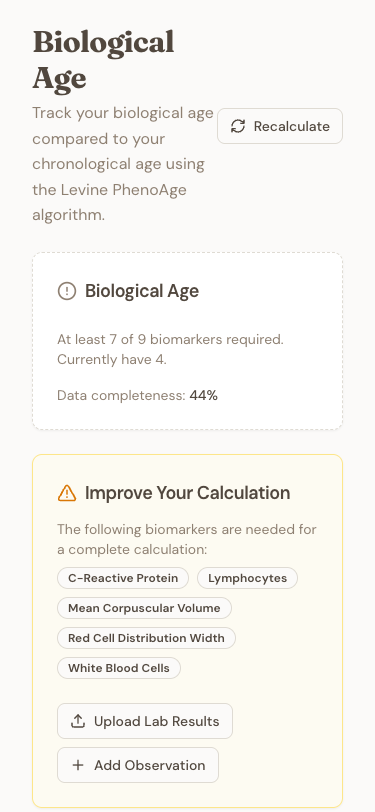
Biological Age Page
View your biological age, required biomarkers, and data completeness progress.
Why These Specific Biomarkers?
These 9 biomarkers were selected because they're commonly available in standard blood panels worldwide, they reflect multiple organ systems (liver, kidneys, immune system, metabolism), they're strong predictors of mortality independent of diagnosed diseases, and they capture both current health status and future risk. The beauty of this approach is that you likely already have these values from routine blood work — no specialized aging tests required.
How JanusMed Calculates Your Biological Age
When you upload lab results to JanusMed, our system automatically extracts the relevant biomarkers. Once we have at least 7 of the 9 required values (plus your chronological age from your profile), we calculate your biological age using the published Levine coefficients. The calculation involves computing a linear predictor from your biomarker values, converting this to a 10-year mortality risk using the Gompertz proportional hazards model, and then mapping that risk back to an equivalent biological age.
Understanding Your Results
Your biological age result includes three key numbers: Biological Age (your calculated phenotypic age in years), Chronological Age (your actual age based on birthdate), and Age Acceleration (the difference between biological and chronological age). Negative acceleration is good — it means you're aging slower than average. Positive acceleration suggests faster biological aging. For example, if you're 45 years old chronologically but have a biological age of 42, your age acceleration is -3 years. You're biologically 'younger' than your peers.
What Each Biomarker Contributes
JanusMed shows you how each biomarker contributes to your biological age. Some markers push your age higher (like elevated glucose or CRP), while others pull it lower (like healthy albumin levels). This breakdown helps you understand which aspects of your health are aging you faster and where interventions might have the most impact. For instance, if high C-reactive protein is significantly increasing your biological age, addressing inflammation through diet, exercise, or medical treatment could improve your score.
Tracking Changes Over Time
Unlike chronological age (which only goes up), biological age can improve. The real power of this metric comes from tracking it over time. As you upload new lab results, JanusMed recalculates your biological age and plots the trend. You can see whether lifestyle changes, treatments, or interventions are actually slowing your biological aging — or whether your health trajectory is accelerating in the wrong direction.
When Data Is Missing or Stale
JanusMed requires at least 7 of the 9 biomarkers to calculate biological age — the algorithm is designed to handle some missing data without significant accuracy loss. However, we'll warn you about missing biomarkers and suggest which tests to request from your doctor. We also flag 'stale' biomarkers — values older than 6 months — since the calculation is most meaningful with recent data. For the most accurate biological age, aim to have all 9 biomarkers from tests taken within the past few months.
Limitations to Keep in Mind
Biological age is a statistical estimate, not a medical diagnosis. It reflects population-level risk based on biomarkers — your individual health depends on many factors this calculation doesn't capture. Acute illness, infection, or temporary conditions can skew biomarkers and inflate your biological age temporarily. The Levine algorithm was developed primarily on U.S. populations; accuracy may vary for other demographics. Use this metric as one tool among many for understanding your health, not as a definitive verdict.
How to Improve Your Biological Age
While genetics play a role, lifestyle factors have enormous influence on the biomarkers that determine biological age. Evidence-based strategies include: regular aerobic and resistance exercise (improves glucose, CRP, and immune markers), anti-inflammatory diet rich in vegetables, fruits, and omega-3s (lowers CRP, improves albumin), maintaining healthy weight (impacts glucose, liver enzymes, inflammation), managing stress and sleep (affects immune markers and inflammation), and avoiding smoking and excessive alcohol (damages multiple biomarkers). Small, consistent improvements in these areas can meaningfully reduce your biological age over time.
Perfect For
- Track the effectiveness of lifestyle interventions like diet and exercise programs
- Get a single metric that summarizes multiple health dimensions
- Identify which biomarkers are contributing most to accelerated aging
- Motivate long-term health behavior change with a tangible, improvable number
- Prepare for longevity-focused conversations with your doctor
Scientific References
Important Note
Biological age is an informative metric based on scientific research, but it is not a medical diagnosis. Use it as a tool to discuss your health with your doctor, not as a substitute for professional medical advice. Always consult a qualified healthcare professional for health decisions.
Upload your lab results and JanusMed will calculate your biological age automatically.